This journey around old wood grain elevators in northern Illinois is the latest installment of Cody’s Road Trips’ Magazine Article series. These destinations are places that I have written about for the magazines that I write for with my work for Shaw Media. When I’m not embarking on road trips, I’ll post some of my older road trips for work to keep this website fresh. There will be more to come.
Wood-based grain elevators from more than 100 years ago can still be seen in the agricultural landscape, some reinforced and still used, and others waiting for Father Time to make its next move on them. Some of them can be found along abandoned railroad right-of-ways that have been survived by the towering structures.
Before modern grain terminals dominated the countryside, nearly every farming community revolved around a wooden grain elevator standing beside the railroad tracks. These towering structures served as the vital link between horse-drawn wagons and the trains that carried the harvest to markets across the country.
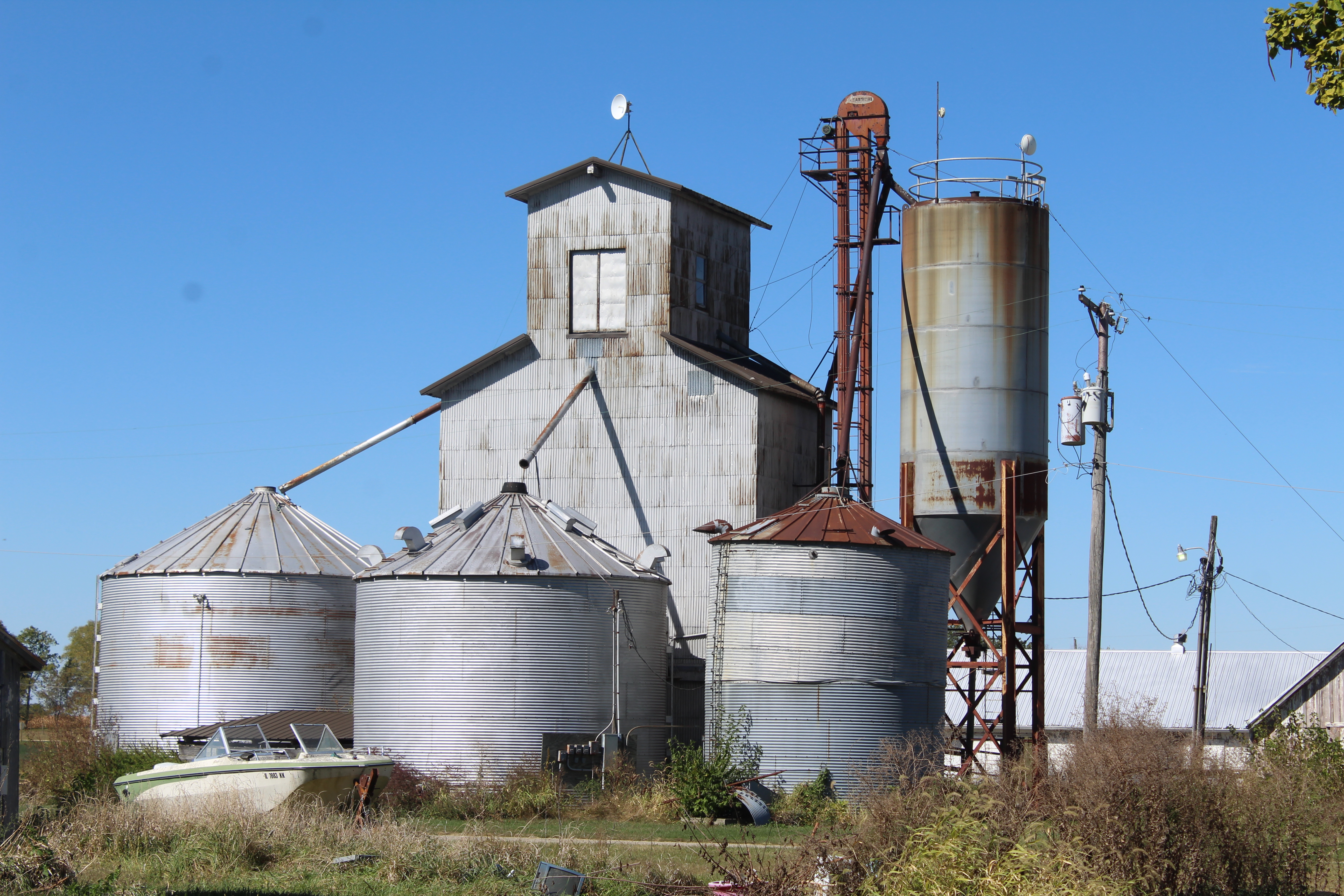
Those once-familiar landmarks are disappearing. Many have been demolished as agriculture has shifted to larger, more efficient storage facilities, while others have quietly weathered decades of change, standing as reminders of a different era in rural America. Their weathered wood siding, distinctive cupola headhouses and faded painted advertisements continue to tell stories of the communities they once served. Most which survive have been supported by metal siding (such as the one in the picture above, in Yorktown, Ill. in Bureau County – which once served the former Hooppole, Yorktown and Tampico railroad).
They were more than places to store grain. Wooden elevators were gathering spots where farmers exchanged news, conducted business and connected with neighbors. They were built alongside main line and branch railroads that reached even the smallest towns, and became symbols of the agricultural economy that helped shape America.
Although hundreds have vanished, a surprising number remain scattered across the countryside. Some continue serving farm operations after more than a century, others have been adapted for new uses by private owners, and a few stand abandoned along long-forgotten rail corridors, slowly yielding to time and the elements.
In the Fall 2024 issue of Northern Illinois Ag Mag, I visited 13 surviving wooden crib elevators throughout that region, exploring their history, architecture and the railroad lines that made them indispensable to rural life. The feature also examines how these structures evolved alongside agriculture and why preserving their stories matters, even as the elevators themselves continue to disappear from the landscape.
Read the full article below via the ISSUU flip book to discover the communities, railroads and remarkable survivors that continue to stand as monuments to the Midwest’s agricultural heritage. The front fold is vertical, but the subsequent pages are inn a traditional layout. (If you cannot see the ISSUU flip book below, CLICK HERE for the article link.)
[Note: The ISSUU magazine link widget above is best compatible for desktop/laptop/iPad monitors; it may appear too small for reading on a standard cell phone. Cell phone users also can download the entire magazine to their phones to improve reading quality by clicking on the direct link to this magazine article (above) and tapping the “download” icon at the bottom bar. The ISSUU magazine page previews flip book shown on this page may not be visible on email subscription newsletters. Safari internet browser users might not see the complete article as displayed on the link’s pages; try opening it in another browser for a better reading experience.]

