I took a 3-day tour around Chicago’s north shore suburbs and the Kenosha/Racine area to wander about and see what all was there. I left wanting to come back for more, there’s plenty of interesting places to see and visit.
Introduction
Day 1: Chicago’s north shore suburbs
Day 2: This post is about being around Kenosha
Day 3: Around Racine, and back home
***CLICK HERE FOR A PHOTO GALLERY TO HELP YOU FOLLOW ALONG IN THIS POST***
I don’t know about you, but it is a little difficult for me to sleep on hotel beds – they’re either not comfortable or too comfortable, and the contours aren’t like my bed at home. Getting up early to take on the second day of the road trip just wasn’t going to be in the cards, but I at least needed to make it to a certain popular place in Kenosha for breakfast – and I did.
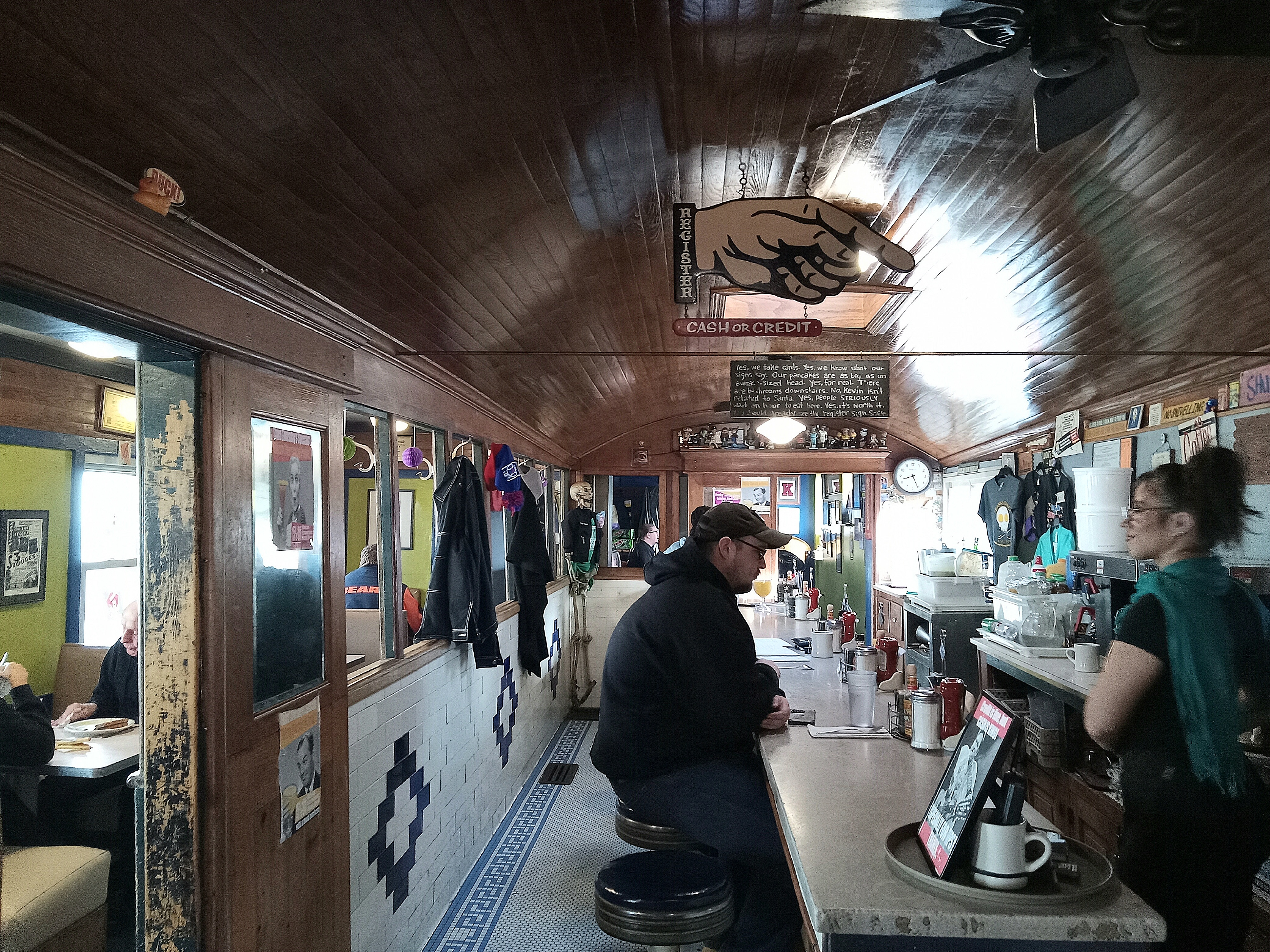
That place is Frank’s Diner, first opened in 1926 and located in downtown and inside an old Roaring ‘20s street car turned into a small building. The place has been popularized by Diners, Drive-ins and Dives on multiple occasions, as well as food shows of the like. You’re not going to find food in such large portions anywhere else, and one of the place’s catchphrases is “Order what you want, eat what you get,” and true to the statement, there are no doggy bags.
Since a large part of the place is within the dimensions of an old street car, you’ll find the kitchen, cash register and bar counter all within that rectangle. There is a small section attached to it with booths, but there’s not many. This all simply adds to the unique experience of Frank’s. The large portions of food are one thing one needs to know about Frank’s. The other is that if you’re a large guy like me, you may find it difficult to move about and sit on the barstool. I dealt with it fine.
I sat on a bar stool almost directly across from the grill, which was only five feet away. If it’s cold outside, that’s where you want to sit.
I ate the cheddar and chorizo omelette – yes, another omelette for breakfast. I’ve never seen chorizo as a meat option, so that’s why I chose it. Gotta warn you, it’s big. Served with round potato discs. And the price? Nice and low for what you get. I enjoyed it all.
Frank’s is well known for its Garbage Plates: five eggs (or three for a half plate), mixed with a combination of hash browns, green peppers, onions, one or more choices of meat, one or more choices of cheeses, and optional jalapeño peppers. There’s an all-vegetable version, too, with zucchini, green peppers, onions, spinach, mushrooms, tomatoes and optional jalapeños. The plates come served with Frank’s thick-sized “homemade” bread.
There’s also a Carthage College Red Men Challenge version of the Garbage Plate with five meats, five veggies, five cheeses, the “home made” toast and a “tall stack of pancakes;” it’s a 45-minute challenge with no bathroom breaks or buckets allowed. Successful complEATers get a t-shirt, name on a plaque and half off the food.
Because of the size of the place, and its popularity, it can get very busy and full, so be aware.
I’ve written in the past about how important it is to make a stop at visitor centers when going on trips. You never knew what new and neat thing you’ll stumble upon in its brochures, magazines and pamphlets. I knew already that I was going to have a full day, so I simply gathered materials for what I know will be a return trip one day.
When you find so much stuff, there’s a need to punt when time is short (I only had three days to work with). It can be both neat and disappointing at the same time.
Plus, I received two free tokens to use for the street car riding experience (keep reading).
One thing to take away from a trip to Kenosha is that its museums are a large part of its tourism. The city’s three big museums are the Kenosha Public Museum, its Civil War Museum and Dinosaur Museum. I figured that with all of the walking for someone my size, and the vastness of information and going to three places, I figured that would be a single, separate day for me – and so I had to punt on all three. No sweat, I know I’m coming back.
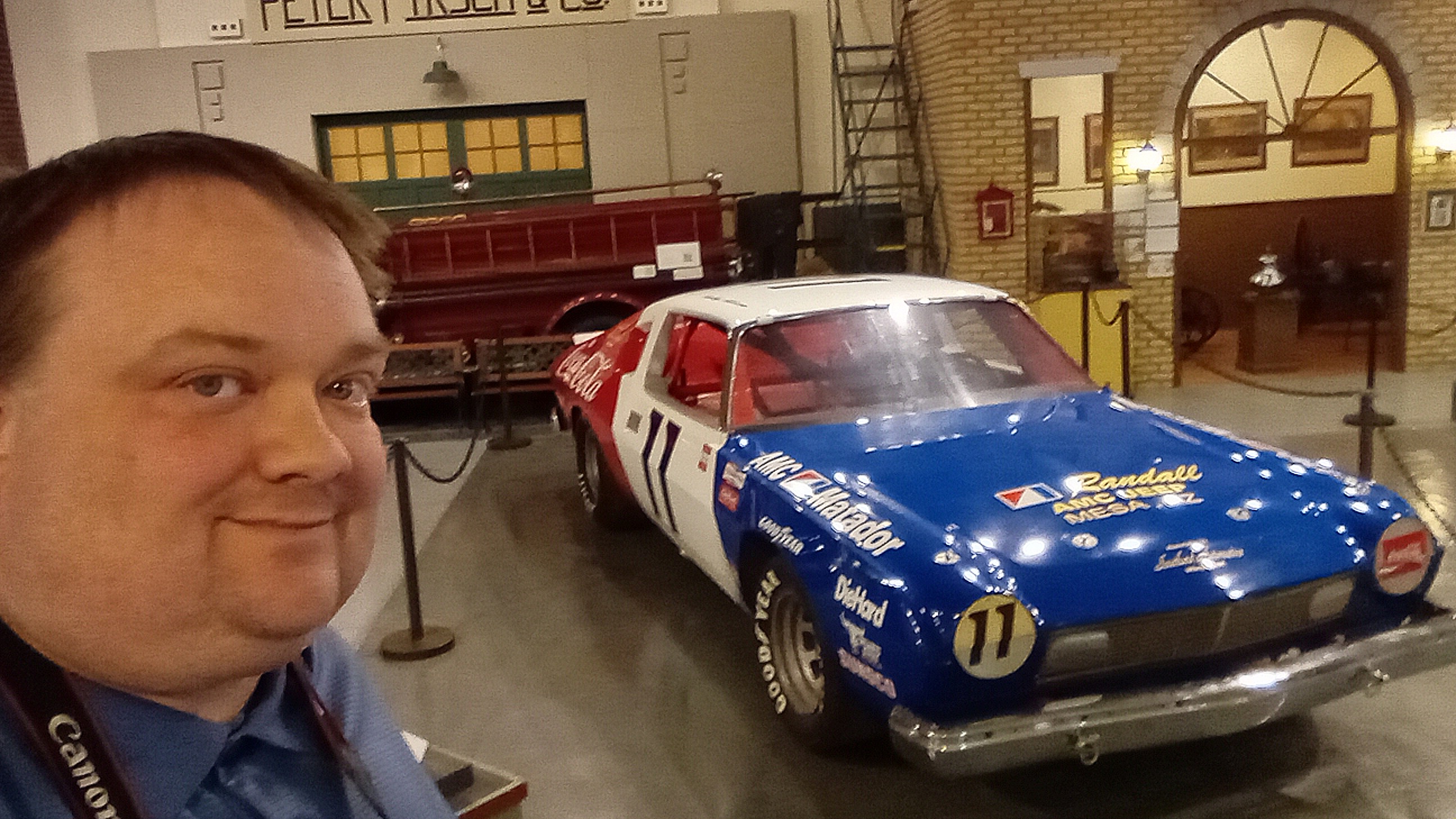
The Kenosha History Center is a separate entity from the aforementioned museum trio. It has a detailed history and collection of artifacts and historical displays from the city’s history: manufacturing, AMC Motors, and its many businesses over the years. AMC Motors made its popular Gremlin car in town; the company closed in the late 1980s and its huge downtown plant has since been demolished and rezoned. The collection includes an AMC NASCAR car from racing great Bobby Allison (pictured at top), and an AMC Rambler American that was featured on 3rd Rock from the Sun. I never watched much 3rd Rock, but I first knew of AMC from the car in Wayne’s World.
Historical dioramas of local businesses and 18th century life in Kenosha also give visitors an idea of what it was like in the old days. Also included is a large display of old toys from the 1940s to then 1970s, which once was part of a private collection.
Not a lot of towns Kenosha’s size have something like this, and I think it’s neat for all of the town’s history and business to be documented and shared to the community. Touring the museum was a great way to learn about all of what Kenosha was, and how it shaped the city it is today. The museum’s front entrance looks out across the Kenosha Canal toward the footprint of the former plant.
Another interesting note about Kenosha’s AMC history is that there’s a small shop on Roosevelt Road that services and has parts for AMC cars. The sign with the familiar AMC logo is there, too.
Pritzker Military Museum and Library
Just outside of Kenosha, near the town of Somers, is the new Pritzker Military Museum and Library, a Helmut Jahn-designed building that looks kind of like one of those Tesla Cybertrucks, but with black and red design. It only opened a few years ago.
Most of the place is its library, and there were only two traveling exhibits on display when I visited. One of them was a large, informative display of many notable women who served in the military.
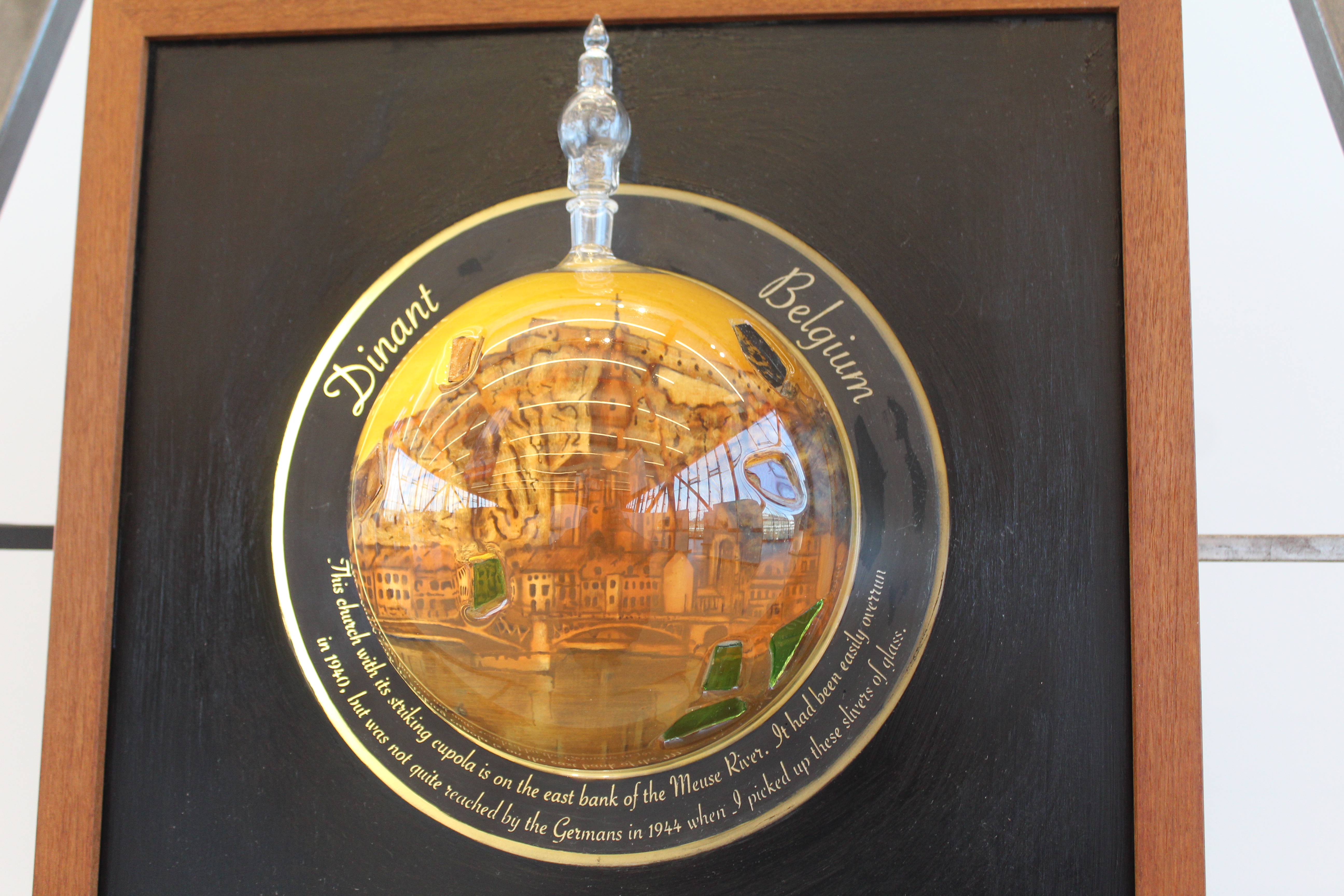
The other, and larger, traveling exhibit was a World War II chaplain’s collection of colorful stained glass pieces from Western European churches that were damaged or destroyed during the war. The collection belonged to Army major Frederick McDonald. He collected several pieces and had them safely shipped back to his home in the United States, where he later made several works of art which involved the pieces of glass. With each piece, he shares his experiences being there, and sometimes etching those statements onto his work. There were around 20 different pieces of work of various sizes.
When you go there, there will be something else there. Check on its website for more details.
After visiting, I made a short trip to Racine to its visitor center to gather information for being there the following day. I’ll touch on Racine in the next entry.

Kenosha’s historical street cars
Two days worth of walking, and I was feeling worn out by mid-afternoon for some reason. I wasn’t used to so much walking. So it kind of deterred by trip a little. However, there was one place where I could experience with sitting down: Kenosha’s historical street cars.
Street cars, on rails, used to be a thing before the 1960s in major cities, and mid-major ones like Kenosha had them as late as the 1930s. Paying homage to the city’s history, a fleet of restored street cars used in cities such as Philadelphia and Toronto were bought and moved to Kenosha and placed on a loop within downtown. The fleet of cars rotates each day, and people getting around downtown use them as part of their commute – so they still have a working purpose and not simply a history thing.
The Toronto-based fleet had street cars that honored those that were in other major cities. The one I rode on for this trip was No. 4609, a red and white car in the style of the then-livery of Pittsburgh. I had never been on a street car before (I plan on a ride on the South Shore Line in Chicago soon) so this was going to be kind of a new experience with the feel on rails. The rumble of being on the rails, the high-pitched sound of the brakes, and the bell that sounds when someone pulls on the wire to stop the car brings one back to how times were like then.
Kenosha’s streetcar line is an oval loop around several downtown blocks, with the county courthouse (yes, that one from the Kyle Rittenhouse trial) and several businesses roped around it, including one with the old large, neon Mayer Rexall Drugs sign on top of a corner business (the drug store is closed, and is now – ironically – a vaping and legal edibles business). At one end of the loop is Harbor Park, which overlooks Lake Michigan and has a large statue of Christopher Columbus. I took the full loop from the city’s transit center that is named after Sen. Joe McCarthy.
Inside the street car, there are advertisements for Kenosha businesses, but the interior remains largely the same as they were originally.
At the Visitor Center I visited earlier, I was given two tokens. One for a ride. I have the other saved for the next trip.
When I drove across the state line the previous day, I made a brief drive through the lakefront of Pleasant Prairie, Wisconsin – a town on the extreme southeast corner of the state, south of Kenosha. I had been here before a few years previously on a road trip I took with my late grandfather.
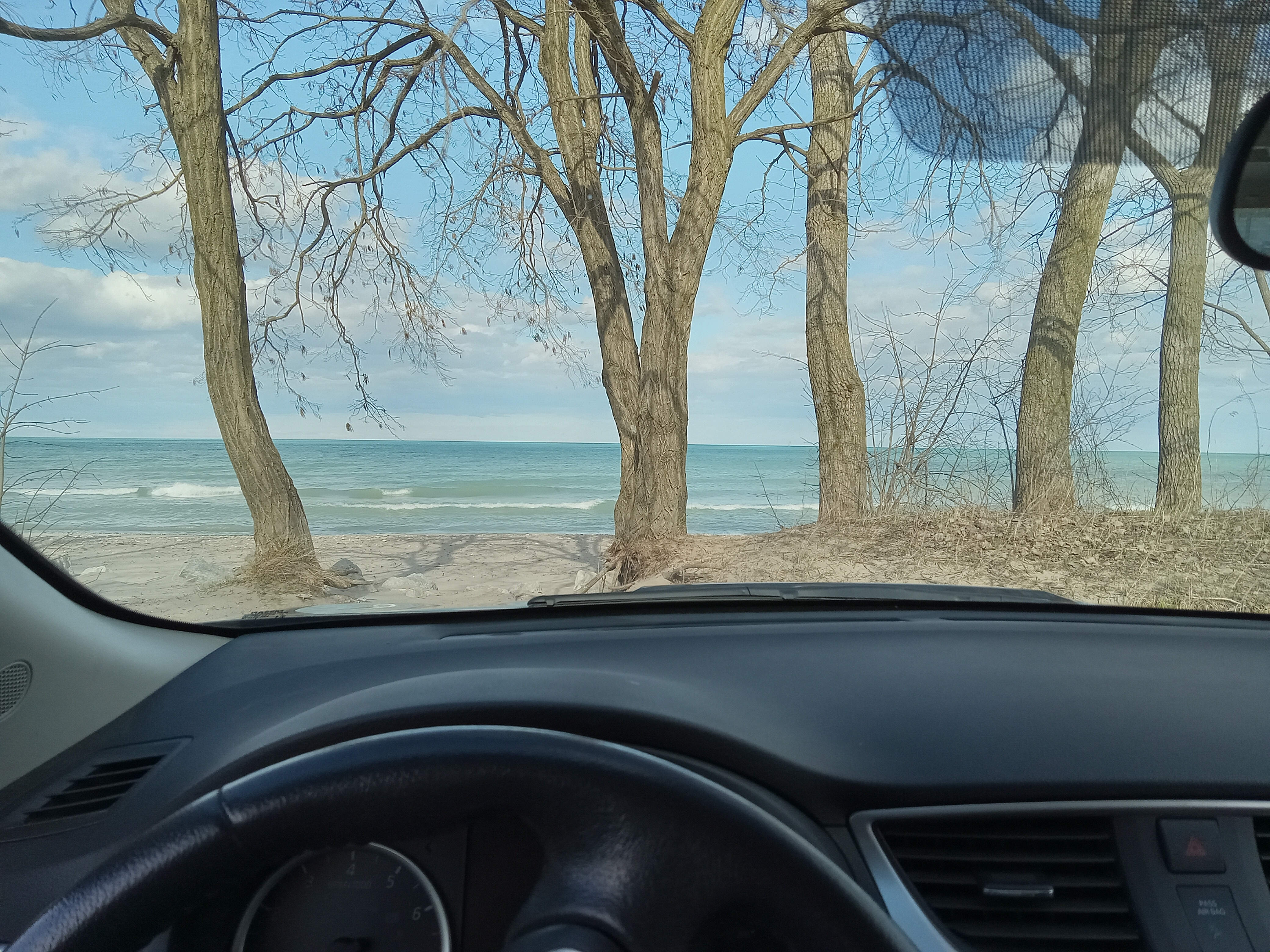
After enjoying the ride on the streetcar, I wanted to go back to Pleasant Prairie to take in a lake view from one of its parks. If walking on sand doesn’t really suit you, but you want to listen to the waves roll in with the car windows down, Pleasant Prairie’s Lakeshore Park is where you want to go. The lake is only about 75 or 100 feet from where one can park their car in a sandy surfaced lot, looking out toward the lake with some small trees in the way.
It just happened to be real windy this day, which made for great wave sounds. They were relaxing to me, as well as the sound of some birds in the background. This is the closest one can get to public parking next to the lake anywhere between Racine and Gary, I think. I did walk a little on the beach, but that was to collect my jar of Lake Michigan. What’s that? I bought a small jar and scooped up sand and rushing wave water to have “a piece” of the lake. I did this a few years ago with Lake Superior when I traveled to Duluth.
Pleasant Prairie’s lakefront has a small road with houses on both sides, and surrounding it all on land is nothing but native prairie. Some houses date back more than 100 years – smaller ones that once had the lakefront all to themselves. Much of the lakefront between Milwaukee and Gary has become utilized in a business, manufacturing or tourism function, but this section of lakefront has areas where it retains that classic look and feel. I wanted to take pictures of the houses, but I don’t like doing that for privacy reasons; if I did, you’d have a neat look at what I’m referring to.
After enough wave listening, it was time to go back to the hotel room to try to get an early start for the next day’s stop in Racine. I figured if I tried to sleep earlier, I would wake up earlier.
Racine’s first stop was a place that my family and I once visited when I was a kid.
To be continued …
 Cody’s Road Trips