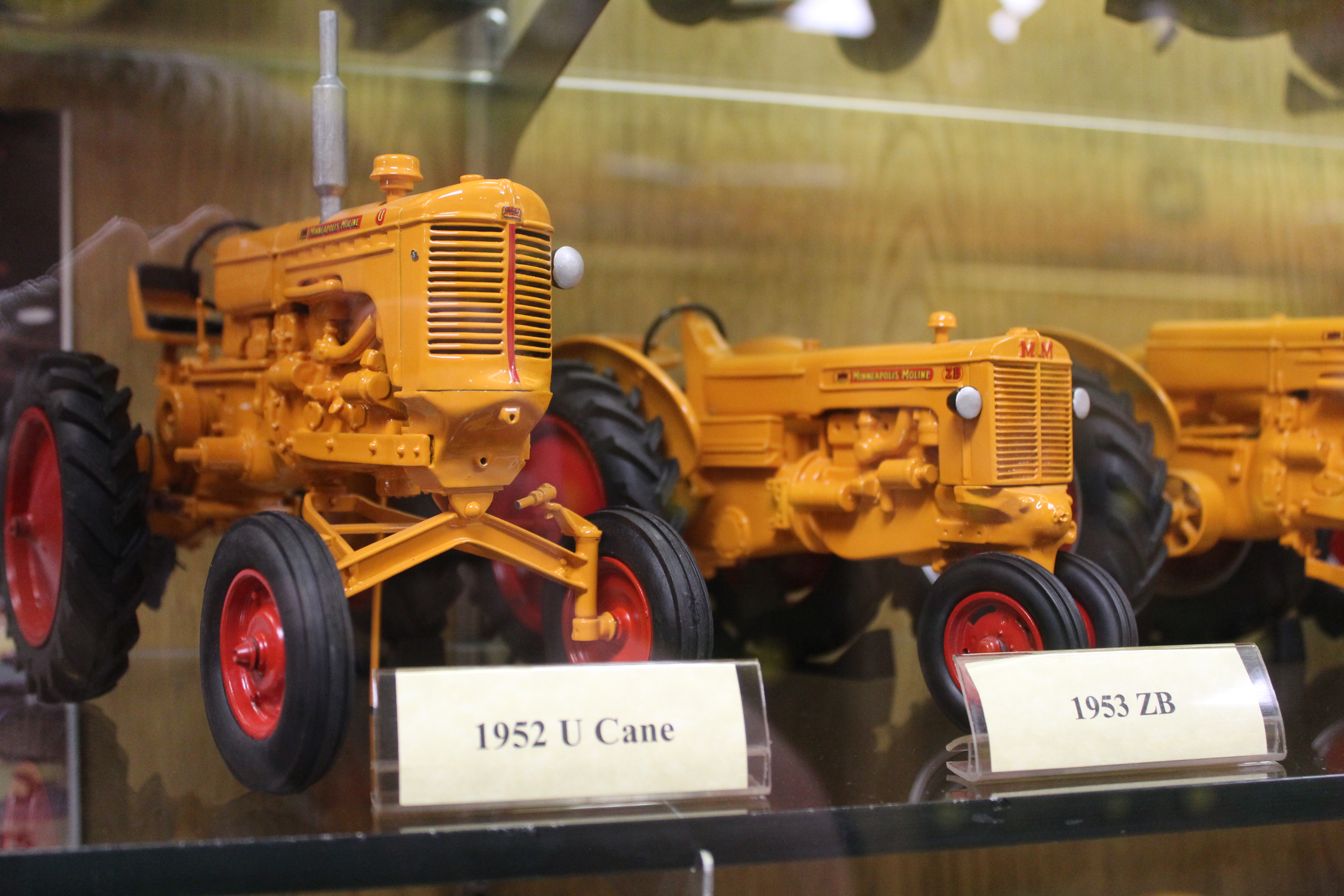
Dyersville, Iowa has a certain meaning depending on what people like. It means baseball to baseball fans, a mecca for local Catholics, and farm toys to farmers.
On this trip to Dyersville, my stop was inspired by a desire to want to learn more about agriculture due to my work on an agriculture magazine. I have already visited the Field of Dreams and saw the outside of the St. Francis Xavier Basilica. This trip was part of a larger one involving Iowa state Route 136.
The National Farm Toy Museum, not too far off of the U.S. 20/52 & state Route 136 interchange, has a large collection of collector and vintage farm toys that kids growing up once enjoyed and adults have kept as showcase material. When young children weren’t able to operate tractors, implements and other farm machinery as a kid, their imaginations ran wild with the smaller scale, non-motorized versions they often rolled on the ground and played with.
**Link to my Flickr Photo Album for this trip**
Not as many farm toys are found in the playrooms of children these days, and likewise, there aren’t as many family farms as there were 50 years ago. Typically, when children grow out of their toys, their parents get rid of them as if they no longer have any value to them. However, when a toy makes a huge impact on sometime, perhaps inspiring them to become a farmer of their own, they have special meaning and are worth of preservation.
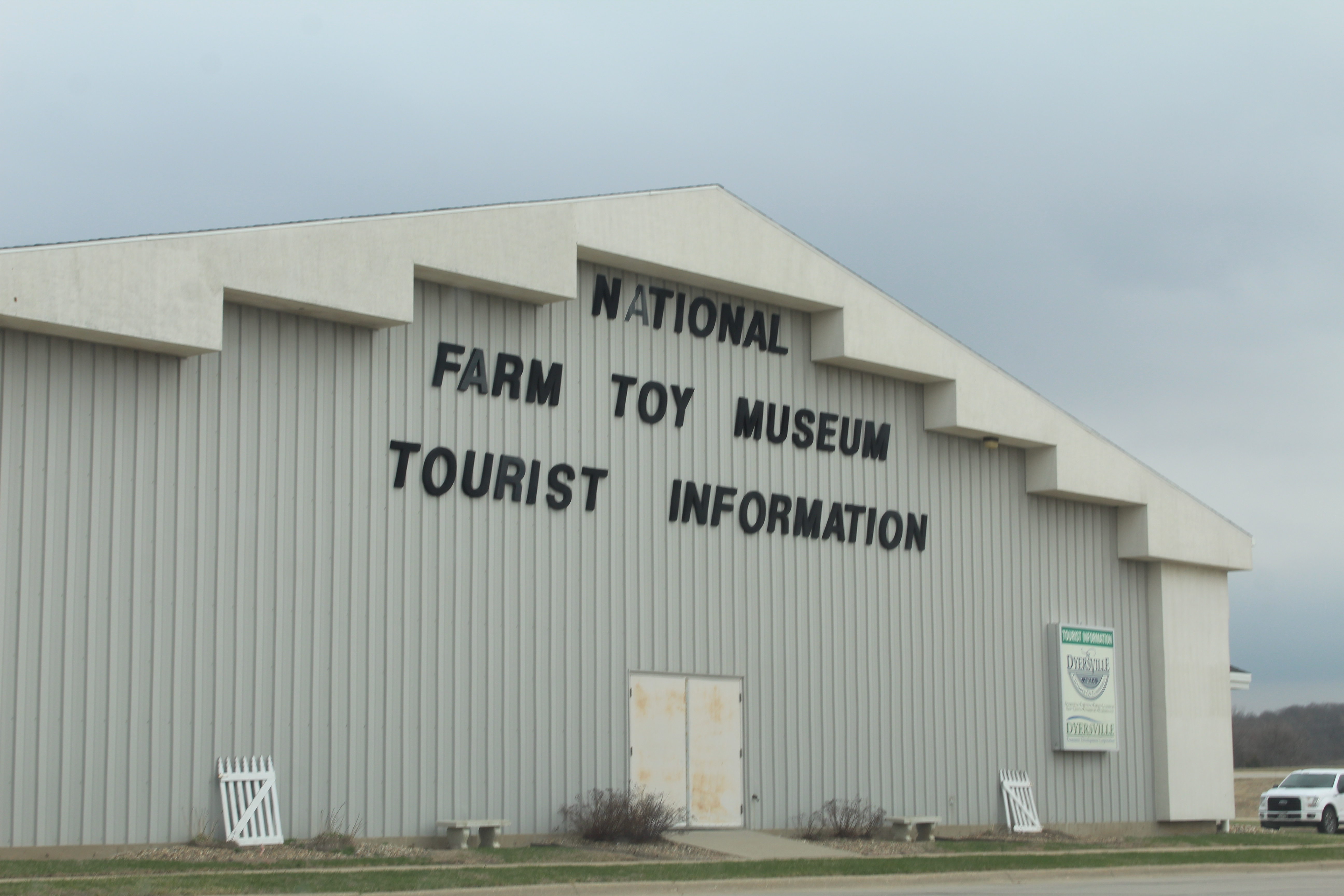
The National Farm Toy Museum came to be as a result of the town being the headquarters of the Ertl Toy Company, and as the site of the National Farm Toy Show. Ertl was established in 1945, and the museum opened nearly 40 years later. More than 30,000 individual toys make up the museum’s space, with the histories of farm toys and farming being among the biggest takeaways from visiting.
As a 39-year-old city boy, my introduction to farm equipment was through color association, particularly John Deere green and Case-IH red. Other colors for other brands existed, too: Case’s orange, and Minneapolis-Moline’s prairie gold (not “yellow,” as Minne-Mo enthusiasts will remind you) were others I later learned about. Within 100 miles from northern Illinois were the hubs of major machine companies such as John Deere (Moline), Moline (obviously), Case (Racine), International Harvester (Chicago, as well as its Farmall Works plant in Rock Island). Mr. Deere himself was a product of Grand Detour, Illinois, which is about 20 miles from where I live.
The museum tour kicks off with a video history of the museum and Ertl toys and then winds over to personal collections of farm toys of the past, many of which are still in great condition. Some of them come from all over the world. Special exhibits make up a section of the museum, which included farm toy models made entirely from wood (with no nails!). The National Farm Toy Hall of Fame room is nearby, with short biographies of those who have made a difference in the world of farm toys.
Farm toys are more than just rolling tractors. They also include toy barns, silos, animals, fencing, semitrucks, figurines of people and just about anything else that one would associate with what farming was like decades ago. The smaller the pieces, the more prestigious – they could easily have become lost in a crevice or large toybox over time. When you get together a full set to create a scene, it’s like the parts are moving in your mind to get an idea of what everyday routines were like.
The largest toys on display are those that young kids actually got to sit on. They’re pedal tractors. You can’t ride on them anymore, but you can get a feel of that next step toward a child’s farming imagination.
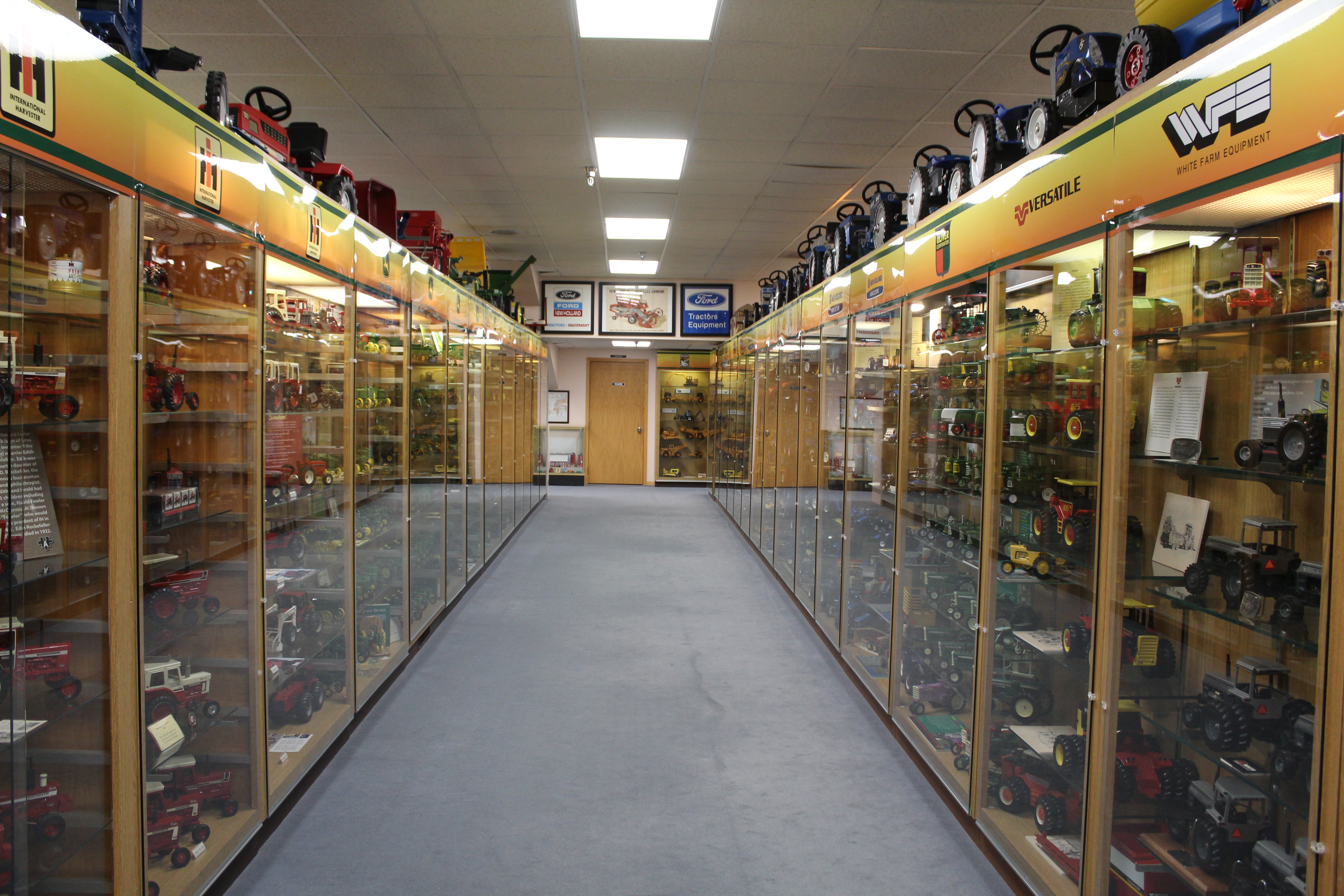
On the second floor, a large collection of toy farm equipment is displayed in shelving and aisles, sorted by the company. Did you know John Deere once made some red tractors? Interesting facts such as that are gleaned from wandering the aisles and peering in the cases. Perhaps you might find the one your ancestors once used on their farm.
One of the interesting things about what’s displayed is that one can see the evolution of farm equipment over time. Several enhancements have been made over the years. Designers dreamed big about machines that ultimately flopped, and some of those have been immortalized in smaller scaling. Some machines had separate add-ons and interesting attachments that were rare as opposed to a more widely available toy.
Even if you’re light years away from the world of agriculture, the technical and evolutionary aspects make the National Farm Toy Museum worth stopping at. Of course, for those in agriculture, the museum is a must-see.
The museum can be a piece of a trip package that includes Dyersville itself, or legs of stops in Dubuque, Maquoketa or Galena. I don’t mention a whole lot about what’s in museums because it would probably make you get an idea of what it is and save you a stop. I write this way to encourage you, reader, to go out and visit places with your own two eyes and come up with your own takeaways.
National Farm Toy Museum
1110 16th Avenue Court SE
Dyersville, IA 52040
563-875-2727
Hours: 9 a.m. to 6 p.m. Monday through Saturday, 10 a.m. to 4 p.m. Sunday.
Online: nationalfarmtoymuseum.com, Facebook, Instagram, X
More about Dyersville: cityofdyersville.com/9/Visitors
 Cody’s Road Trips