Commentary: U.S. Route 66 had its final end points, and they’re not piers
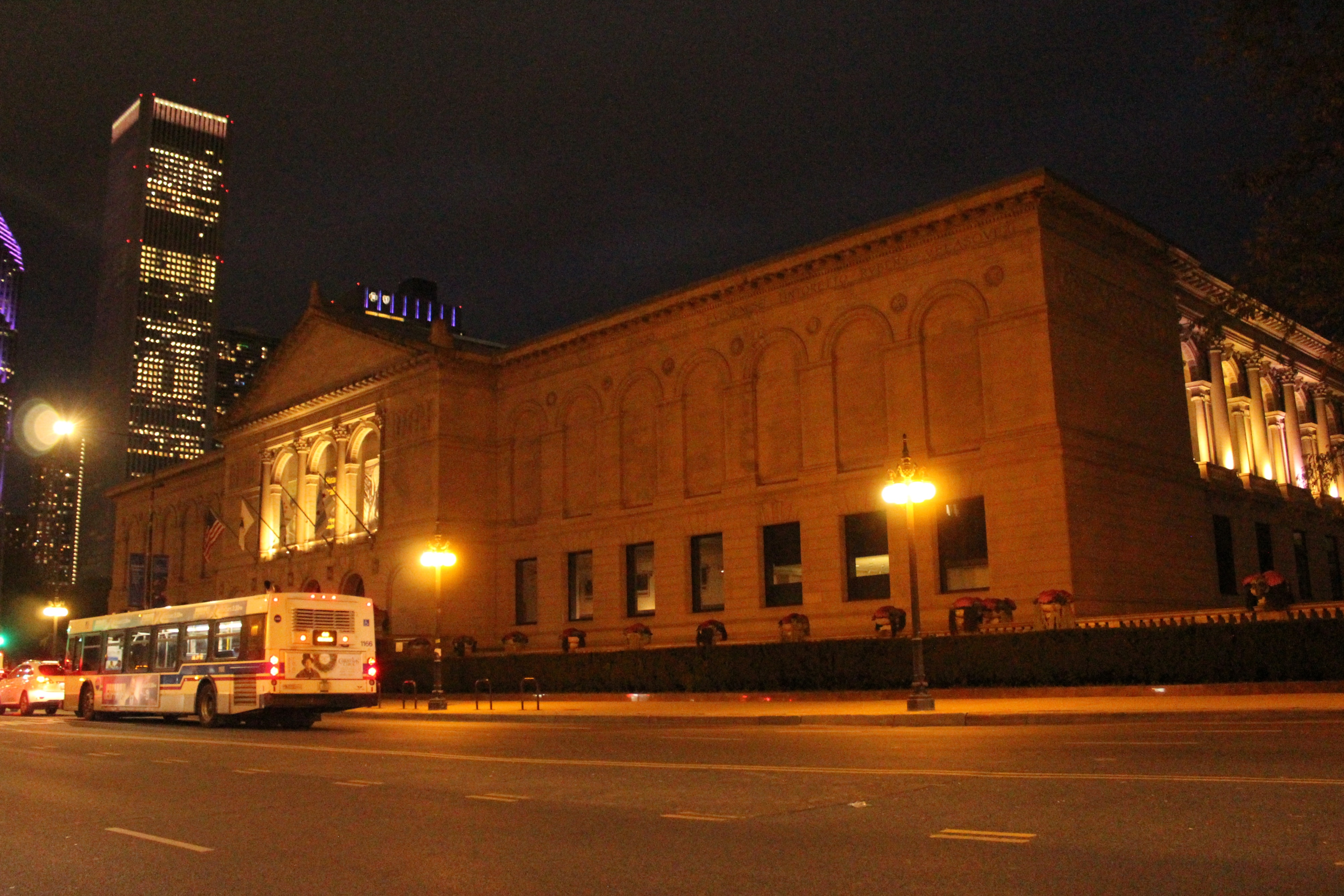
The final eastern terminus of U.S. Route 66, upon decommissioning of the route in Illinois in 1974, was at Michigan Avenue (former alignment of U.S. Route 14) and Adams (westbound on a one-way) and Jackson (eastbound on a one-way) boulevards in Chicago.
It was not, has not, or ever will be, Navy Pier. The noteworthy end destination is at Grant Park, or in the case of Adams, the Art Institute of Illinois.
Likewise, the final western terminus of U.S. Route 66, upon decommissioning of the route in California in 1964, was at Olympic and Lincoln boulevards (former alignment of alternate U.S. Route 101) in Santa Monica. The noteworthy end destination is at Mel’s Drive-in (now Diner).
It was not, has not, or ever will be, the Santa Monica Pier.
However, long after the end date of the highway’s official statuses in Illinois and California, tourism marketing initiatives – false tourism marketing initiatives – have made it so that we’re just going to say that the route stretch”ed” from pier to pier – which is not true.
Why so grumpy about such a small thing, Cody? Because there is a fine line between right and wrong, and truth and falsehood. The designation of the piers at end points – most recently the “official” unveiling of the new eastern end point at Navy Pier on March 25, 2026 – have now created confusion to an unknowing public about where the end points actually are. The Santa Monica Pier “extension” happened in 2009, 45 years after the California decommissioning.
I first learned of the move after talking with the longtime docent of the Illinois Route 66 museum, Rose, when I visited its location in Pontiac in February. This will be a future post upon completion of visiting more places in Pontiac. I listened to her telling me this, and told her that I agreed with her that it wasn’t right – thinking in my head that this would never really happen. Well …
The power of marketing will eventually persuade people years down the road that the route “went” from pier to pier – when it didn’t. Then those same people look at a website post like the one you’re reading and go, “What’s this hooey about it starting at the Art Institute?” Thanks to AI-generated information that – ugh! – people are now taking as truth, that thing that AI wrote “is true” and “some guy from Sterling, Illinois” is wrong.
The point is this: Route 66 has a beginning date, 1926 (it, and most other one- or two-digit U.S. highways are turning 100 this year), and an end date depending on where it was commissioned. It was decommissioned piecemeal from 1964 to 1985 with the development of interstate highways between Chicago and Santa Monica. The section from Arizona to Joplin, Mo. was removed in 1985, bringing the highway to an official end. Its factual history doesn’t change after the endpoint of the chronology, unless there was a factual rediscovery. Now, if archives of the 1920s resurfaced in the future to state that the official endpoints were to actually be the piers, then consider it so; but the end dates have definitely been defined.
The route’s decommissioning in Illinois in 1974 means that there is no additions or changes to the actual history of the route in Illinois after that year, unless recent rediscovery says so. There was no recent rediscovery that the endpoint was Navy Pier. This is a tourism marketing ploy. As a journalist, I deal with marketing-based boasting often: namely, this restaurant “was the first to do this,” when it, according to fact, wasn’t. And how dare we challenge that, because it’s detrimental to the restaurant making a profit – right?
Altering the history of non-current things is like renaming a building torn down 50 years in honor of someone – in 2026. Altering the history of non-current things is like placing a dead 5’10” corpse on a medieval body stretching device to say that the person reached six feet fall.
Speaking of restaurants, I don’t think Mel’s in Santa Monica has lost business because of the pier there, nor will the Art Institute hasn’t lose any business because of Navy Pier.
However, facts are facts, and shouldn’t be changed simply because it’s convenient (including financially) for some entity. Convenient, in this case, to get more tourism revenue to Navy Pier – which, by the way, what exactly IS at Navy Pier?
***
A couple of more comments to make while it’s on my mind …
Gas prices are up. They’ve risen in a two-week period in my hometown from $2.99/gallon to $4.19/gallon in three weeks, which is the sharpest rise since Hurricane Katrina in 2005. If your vehicle is gas-powered, that’s an added expense on your road trip. It briefly made me think about road tripping to communities that have historically had cheaper gas than where I live. Examples being La Salle-Peru, where gas is usually about $0.25-$0.40 lower, or anywhere in eastern Iowa – a state whose gasoline tax is less than Illinois’.
You’ll want to know your vehicle’s miles-per-gallon figure and your vehicle’s gas tank volume to consider whether getting gas cheaper away from home is worth your while. For older vehicles without a computer, to figure out your MPG, fill your tank from empty to full, note the gallons filled figure at the pump, and your odometer. When it gets to empty again, note the new number on the odometer. Subtract the odometer numbers and take that number and divide it by the gas tank volume.
If your MPG is 30 miles/gallon, and the cheap gas place you wish to go to is 30 miles away, the price of two gallons of gas will need to be factored into your decision.
A friend recently suggested that if you pack your own meals instead of eating out, that might help alleviate the pain at the pump.
That’s a night shot of the Art Institute at the top of the page. You’d typically want to see such a building in the daytime. I’ve been trying to figure out how to take good night shots with my camera. My Canon Rebel T100 is still a better camera than a cell phone, and the pocket-sized Samsung that I had before. I use no lens additions, and the camera is just 72 resolution. While more professional cameras, and larger lenses, are out there, they are very expensive to me and I choose to make do with what I have.
I am going to create a separate album of night shot photography soon which has some of my night shot work. I took some in Chicago last year, as well as some in Peoria. Having no professional photography training, this is still a work in progress, and perhaps any feedback could make what I do better.
 Cody’s Road Trips